


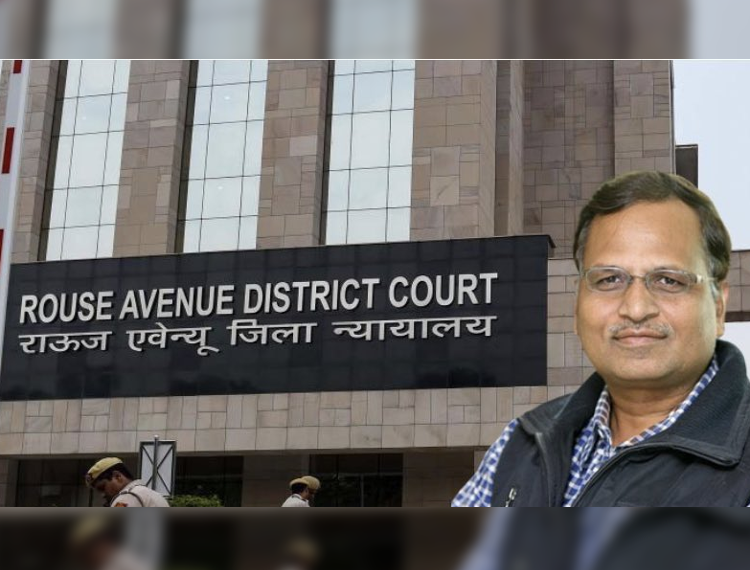
A Delhi court remanded AAP leader Satyendar Jain and four others to 14-day judicial custody in the Delhi Jal Board corruption case, according to ANI News. Special Judge Dig Vinay Singh rejected Jain’s plea challenging his arrest by the Anti-Corruption Branch over alleged tender manipulation for sewage treatment plants. A bail hearing is scheduled for August 25. Another accused, Ankit Srivastava, was sent to police custody, as reports.
On Wednesday, a Delhi court remanded former AAP minister Satyendar Jain and four co-accused to 14 days of judicial custody in a high-profile corruption case linked to the Delhi Jal Board.
Special Judge Dig Vinay Singh of the Rouse Avenue Courts presided over the hearing and formally rejected Jain’s application seeking to declare his recent arrest by the Anti-Corruption Branch (ACB) illegal, according to a news updates.
The ACB arrested Jain and five others in connection with an FIR registered in May 2024. As noted in a report by The Economic Times, the other accused remanded to judicial custody include former DJB CEO Udit Prakash Rai, alongside private contractors Nagendra Yadav, Raja Kumar Kurra, and Pankaj Verma.
Meanwhile, a sixth accused, former contractual consultant Ankit Srivastava, was sent to police custody for further interrogation. The court has issued notices regarding the bail pleas filed by Jain and his co-accused, scheduling the critical hearings for August 25, as highlighted by media outlets.
The controversy stems from a complaint initiated by the Delhi Government’s Directorate of Vigilance. Authorities allege large-scale irregularities, criminal conspiracy, and manipulation of tender conditions during the augmentation and upgrading of local sewage treatment plants.
According to findings covered by India Today, investigators claim the tendering process featured restrictive technical specifications deliberately designed to limit fair competition.
The ACB alleges these altered parameters provided an undue financial advantage to a specific private entity, Euroteck Environment Pvt. Ltd., at the expense of the state exchequer. Authorities further assert that private individuals maintained continuous communication with public servants to coordinate the manipulation of the official tender notice.
