


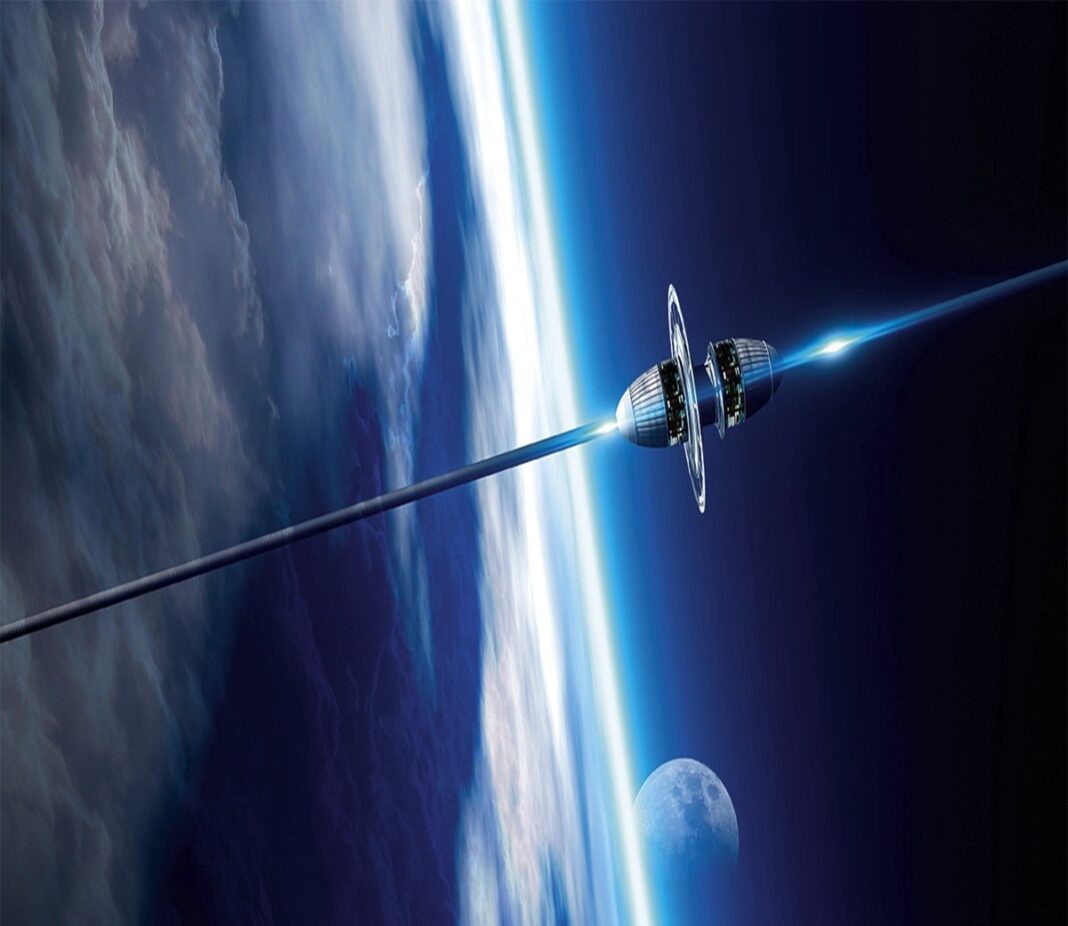
Scientists at the International Space Elevator Consortium identified polycrystalline graphene as a groundbreaking material that could turn century-old space elevator concepts into engineering reality. Extending over 62,000 miles into space, the proposed tether requires a lightweight structure roughly 100 times stronger than steel. Powered by clean electricity, robotic climbers travelling up the high-tensile cable would transport cargo and passengers into orbit, offering a safer, eco-friendly alternative to rocket launches without creating atmospheric pollution or orbital debris.
According to studies published by the International Space Elevator Consortium, constructing an Earth-to-space cable requires an ultra-lightweight material possessing exceptional tensile strength. Traditional materials like steel or titanium snap under their own weight at extreme lengths. Polycrystalline graphene, a specialized two-dimensional carbon lattice, provides roughly one hundred times the tensile strength of steel while remaining light enough to withstand gravitational and centrifugal pull across geostationary distances.
How Would Space Elevators Send Payloads Into Orbit?
The space elevator architecture anchors a long multi-layer tether to an equatorial ocean spaceport, extending the cable far beyond geostationary orbit to an offshore counterweight. Electrically powered mechanical climbers ascend the stationary cable carrying satellites, scientific payloads, and human passengers into low Earth orbit. This continuous elevator system bypasses volatile rocket fuel combustion entirely, eliminating harmful atmospheric greenhouse emissions, reducing launch expenditures dramatically, and preventing dangerous space debris accumulation.
While Korean engineering facilities successfully manufactured continuous polycrystalline graphene sheets at rapid production speeds, scaling output to produce thousands of interconnected 62,000-mile strands remains a major industrial hurdle. Additionally, engineers are designing multi-cable redundancy systems to safeguard the tether against orbital debris collisions and high-altitude atmospheric turbulence.
Replacing chemical rockets with electrical tether climbers marks a revolutionary leap forward for commercial space logistics. Advanced material science continues paving the way toward safe, routine, and sustainable interplanetary transportation.
