


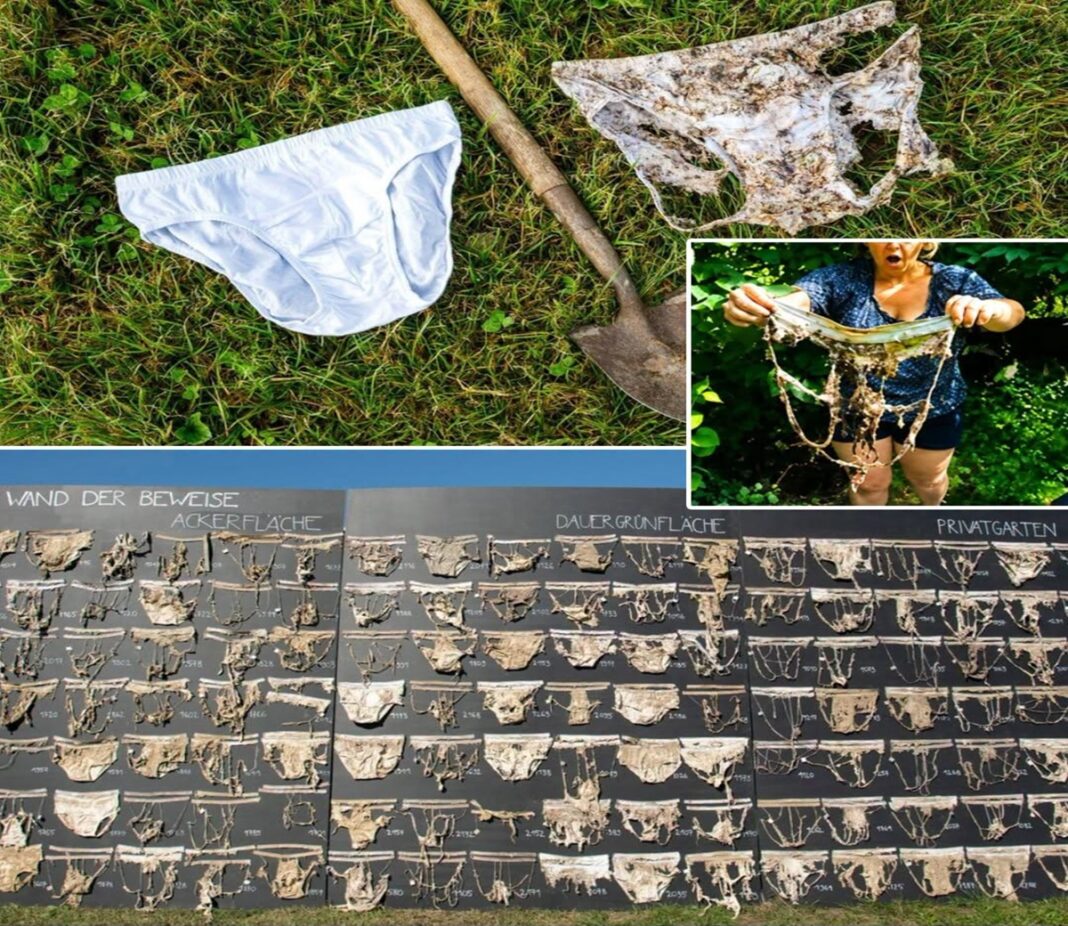
Environmental scientists and agricultural researchers routinely develop innovative diagnostic methods to evaluate underground biological vitality. Environmental study releases confirm that scientists asked people bury underwear across diverse land plots to accurately measure soil microbial activity and organic decomposition speed.
Researchers at Agroscope launched the nationwide project to evaluate soil health using pure cotton undergarments as a standard biological benchmark. Pure cotton consists almost entirely of natural cellulose, which serves as a prime food source for subterranean organisms. Microscopic bacteria, fungi, protozoa, and earthworms aggressively consume cellulose fibers when soil ecosystems thrive. By exhuming the undergarments after two months, researchers measure remaining fabric weight to assess biological activity levels without relying on costly chemical laboratory testing.
Do Scientists Use Cotton To Test Soil Health?
Scientists say cotton decomposition rates can provide useful clues about soil health. Undergarments buried in nutrient-rich, pesticide-free soil may degrade rapidly, leaving behind only non-biodegradable elastic waistbands. Scientists associate rapid degradation with dense populations of active microbes, good moisture retention, and strong metabolic activity. Conversely, fabric remaining largely intact after sixty days may indicate depleted microbial life, poor aeration, excessive chemical compaction, or severe drought conditions.
Engaging one thousand citizen scientists allowed researchers to collect standardized environmental data across varied terrain, including private gardens, conventional cropland, organic farms, and wild forest floors simultaneously. Comparing decomposition rates across land uses helps agronomists refine sustainable farming techniques, reduce synthetic fertilizer reliance, and protect underground biodiversity.
Innovative soil testing methods demonstrate that simple visual experiments yield vital ecological insights. Monitoring microbial health remains essential for ensuring future food security and maintaining balanced terrestrial ecosystems.
