


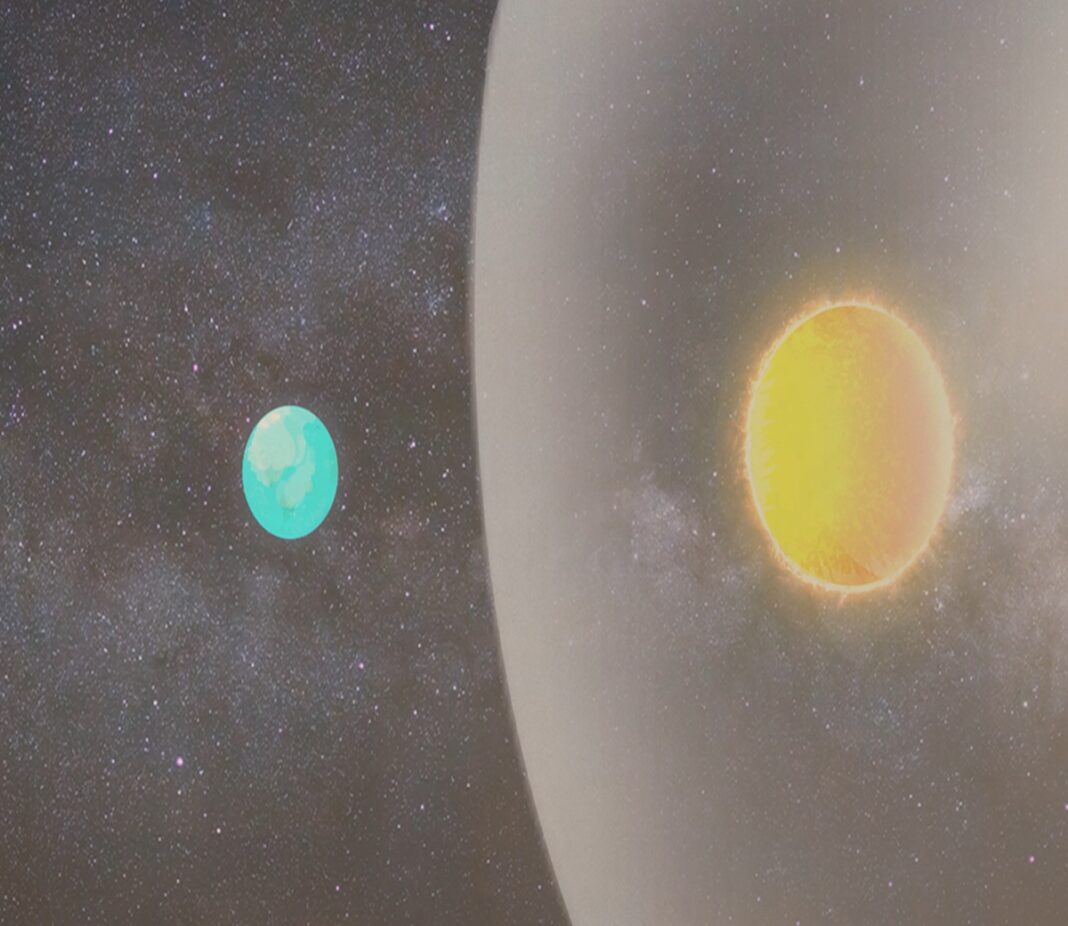
The Sun’s ancient history offers unprecedented insights into Earth’s planetary climate evolution. Astrophysical modeling and geological data, supported by NASA research, suggest that the Sun’s influence on Earth extends beyond solar radiation and may also involve the solar system’s long-term journey through the Milky Way galaxy.
As the Sun orbits the galactic center, it carries a protective magnetic bubble known as the heliosphere, which shields surrounding planets from deep-space radiation. Computer modeling shows that the solar system encountered massive, dense interstellar cold clouds during key evolutionary periods. These dense gas clouds pressed inward against the solar wind, squeezing the heliosphere to a size smaller than Earth’s orbital path. Consequently, Earth spent prolonged periods outside its protective solar bubble, directly exposed to cosmic rays and cold galactic dust that drove significant atmospheric cooling and ice age cycles.
How Did The Sun’s Solar Bubble Affect Ancient Earth?
Geologic records from deep-sea sediments, Antarctic ice and lunar soil reveal spikes in interstellar isotopes that researchers can compare with models of the Sun’s past environment. Studies also explore how the younger, dimmer Sun could have influenced atmospheric chemistry and greenhouse warming, helping explain liquid oceans on ancient Earth. Together, the evidence suggests solar and galactic conditions may have influenced Earth’s climate evolution.
Reconstructing historical heliospheric changes allows heliophysicists to evaluate how space weather and cosmic environments influence long-term habitability across planetary systems.
Understanding the deep astronomical forces driving planetary history enhances our knowledge of Earth’s climate resilience. Continuing galactic mapping efforts will further illuminate how interstellar environments shape planetary evolution across the universe.
