


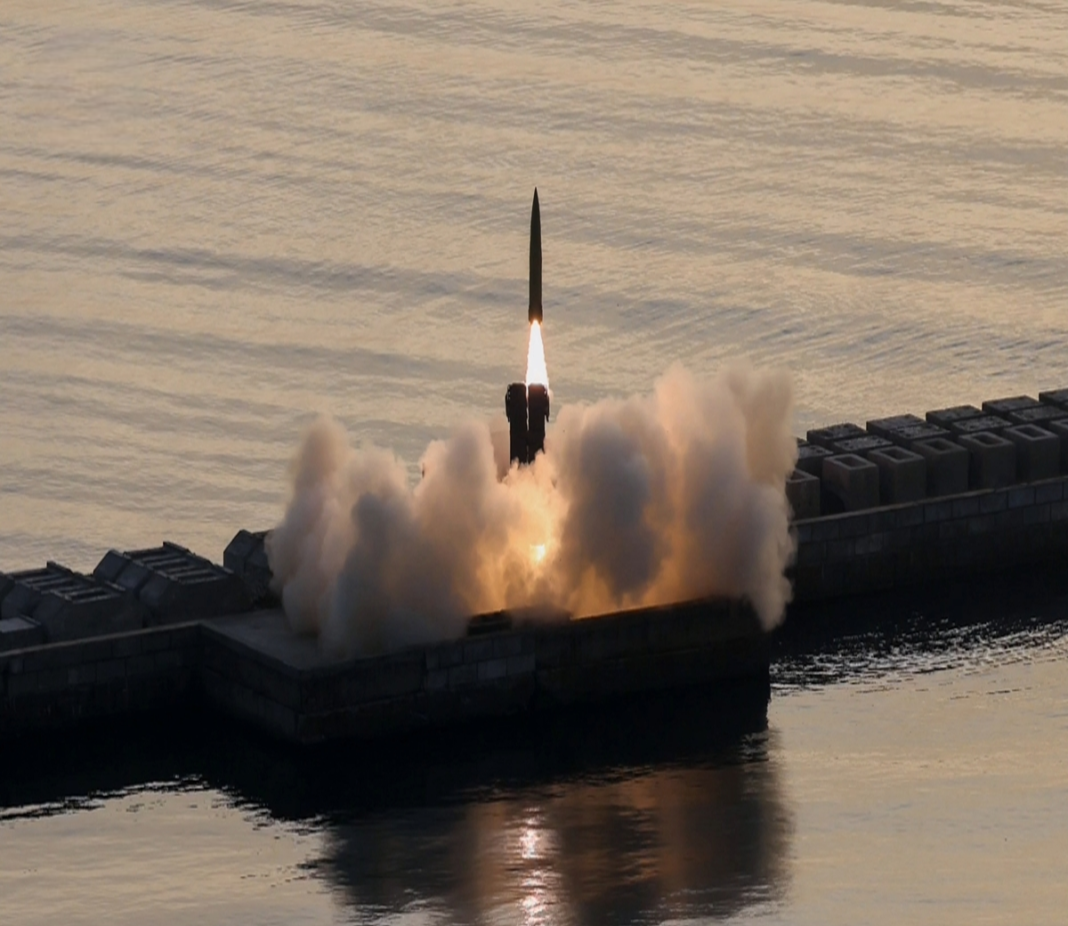
North Korea intensified geopolitical tensions across East Asia today after conducting fresh military activity along the Korean Peninsula. Defense officials in Seoul confirmed that North Korea fired an unidentified projectile toward the Sea of Japan from its eastern coastal territory, prompting heightened military readiness among neighboring allied nations.
South Korea’s Joint Chiefs of Staff detected multiple short-range ballistic missile trajectories originating near the Wonsan coastal region. The weapons test occurred less than twenty-four hours after the United States, South Korea, and Japan concluded their five-day trilateral Freedom Edge military exercises. Pyongyang strongly criticized the multi-domain allied drills, describing them as an explicit security threat and warning of strong countermeasures from a position of national power.
How Are Allies Responding To North Korea’s Launch?
North Korea’s latest launch prompted South Korean defense forces to intensify intelligence monitoring and tracking in coordination with Washington and Tokyo. Japan’s Defense Ministry reported that the missile traveled through international airspace before falling into the Sea of Japan outside its exclusive economic zone. Allied analysts are examining flight data to determine the missile’s class, altitude and operational velocity.
Pyongyang views trilateral military drills as provocative practice for an invasion or regime change. In response, North Korean defense leadership frequently conducts retaliatory missile tests to demonstrate expanding offensive capabilities and deter joint allied operations.
Maintaining active surveillance remains critical for preserving stability across the Korean Peninsula. Neighboring nations continue monitoring North Korean military installations for further provocative weapons testing.
