


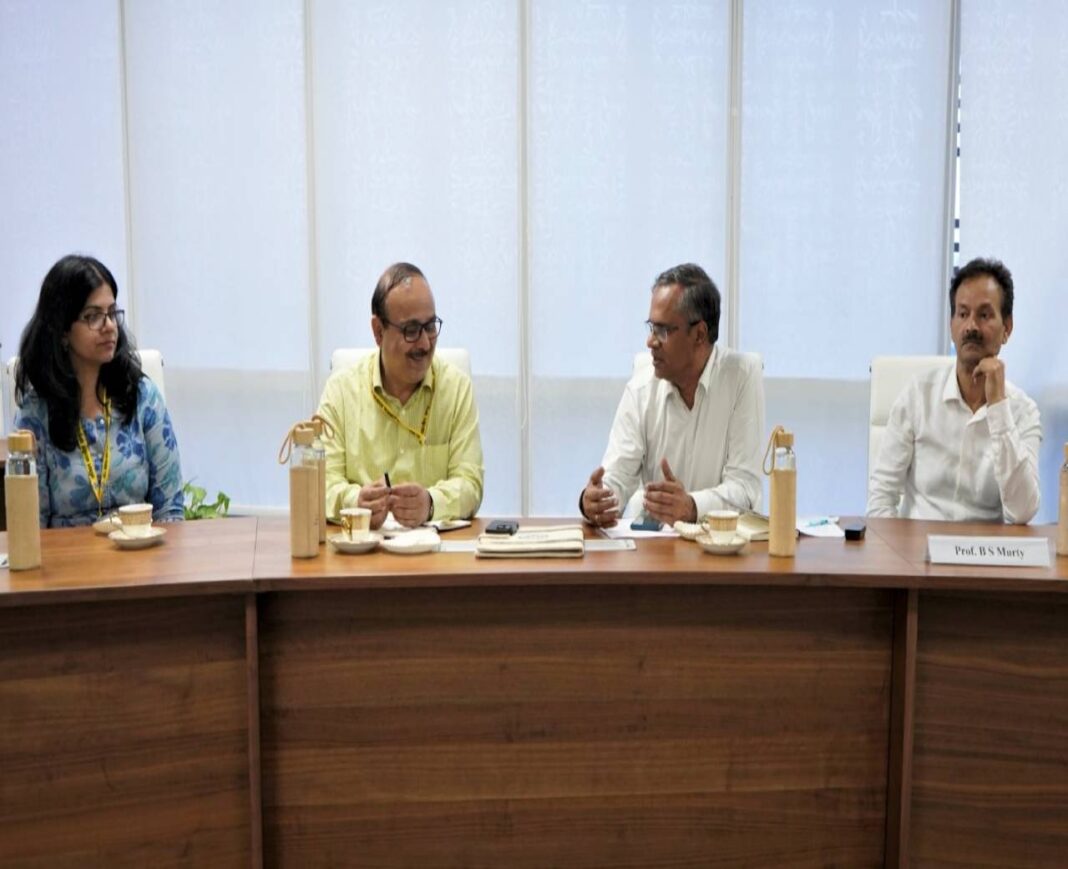
IIT Hyderabad AIIMS healthcare partnership discussions are focusing on combining advanced technology with clinical expertise to develop practical solutions for major healthcare challenges in India.Faculty from IIT Hyderabad and experts from AIIMS Bibinagar discussed opportunities spanning medicine, engineering, artificial intelligence, biomedical sciences and digital healthcare. The objective is to identify complementary strengths and translate research into technologies that can address real clinical needs.
IIT Hyderabad brings expertise in artificial intelligence, drug discovery, molecular biology, advanced materials, biomedical engineering, medical devices, imaging, sensors, nanotechnology and digital technologies. AIIMS Bibinagar contributes clinical capabilities in infectious diseases, oncology, orthodontics, orthopaedics and healthcare delivery.
IIT Hyderabad Explores AI-Driven Healthcare Solutions
IIT Hyderabad and AIIMS Bibinagar are exploring collaboration in AI-enabled healthcare, digital health, telemedicine, advanced medical devices, implants and disease research to develop clinically relevant solutions. The institutions also discussed partnering with Sammakka Sarakka Central Tribal University in Mulugu, with a focus on improving healthcare access for rural and tribal communities and extending medical innovation beyond hospitals and research laboratories.
The discussions are being pursued under IIT Hyderabad Director Prof BS Murty and AIIMS Bibinagar Executive Director Prof Amita Aggarwal. Research leaders from both institutions facilitated the meeting.The initiative reflects a broader effort to connect engineering research with frontline medical requirements. IIT Hyderabad has been exploring ways to apply technologies developed by its researchers to healthcare problems through closer engagement with clinicians.
Prof G Narahari Sastry of IIT Hyderabad said the collaboration should expand beyond individual partnerships into larger institutional programmes involving both organisations.For patients and researchers, such cooperation could help bridge laboratory innovation and clinical application. The proposed partnership could support scalable medical technologies, stronger interdisciplinary research and improved healthcare access, particularly for underserved communities across India.
