


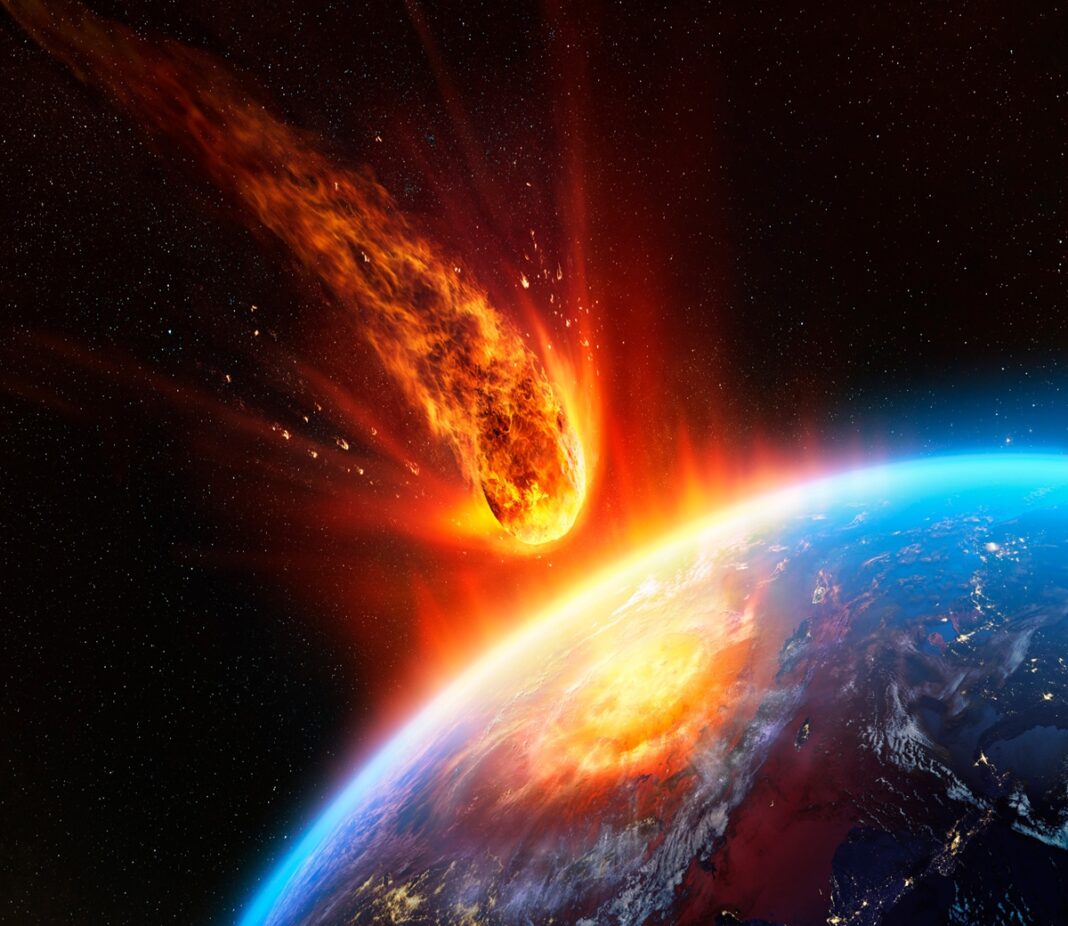
Australia witnessed another significant operational milestone in automated space surveillance after astronomical observatories tracked a small near-Earth object before atmospheric collision. Data confirmed that the asteroid, detected before impact over Australia, burned up completely in the upper atmosphere over the Indian Ocean.
The Catalina Sky Survey at Mount Lemmon Observatory in Arizona initially identified the faint moving object roughly seven hours before entry. Orbital analysts at NASA’s Center for Near-Earth Object Studies and the European Space Agency quickly processed early positional data to determine its exact speed, trajectory, and atmospheric impact zone. Because the object measured approximately one meter across, friction against dense atmospheric gases completely fragmented the rock into a harmless high-altitude fireball.
What Did Australia’s Asteroid Event Reveal?
Small space rocks usually go entirely unnoticed due to their faint reflection and rapid speed across deep space. Successfully predicting the atmospheric encounter over Australia marks only the 13 time humanity has detected an asteroid before Earth entry. These rapid detections provide valuable real-world testing for planetary defense warning networks, automated orbit calculations, and international observation coordination.
Tracking small impactors demonstrates the increasing sensitivity of ground-based sky surveys and rapid automated data processing systems. While meter-sized rocks burn up harmlessly without human intervention, maintaining high detection speed ensures space agencies can issue timely warnings if a significantly larger asteroid ever threatens populated regions.
Rapid pre-impact identification highlights humanity’s expanding capability to monitor near-Earth space. Continuous technological upgrades across automated telescopes ensure Earth remains well-monitored against unexpected cosmic encounters.
