


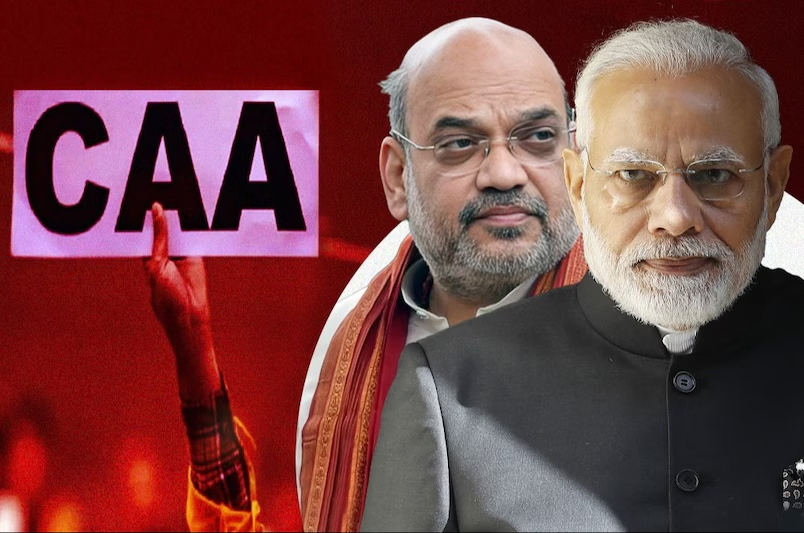
The Ministry of Home Affairs delegated power directly to District Collectors across eight states and union territories to accelerate the Citizenship Amendment Act (CAA) implementation. Under the Citizenship (Third Amendment) Rules, 2026, District Collectors can verify documents, conduct background enquiries, administer the Oath of Allegiance, and issue citizenship certificates directly. This eliminates the previous multi-tiered Empowered Committees system across regions including West Bengal, Gujarat, Punjab, Rajasthan, and Jammu & Kashmir.
The major change:
The Union Ministry of Home Affairs notified the Citizenship (Third Amendment) Rules, 2026, transferring the authority to process, verify, and grant citizenship applications under Section 6B of the Citizenship Act directly to District Collectors across eight states and union territories.
States and regions fall under this framework:
The decentralized mechanism covers Gujarat, Rajasthan, Punjab, West Bengal, Jammu & Kashmir, and Ladakh, along with non-tribal areas in Assam and Tripura. Notified tribal areas under the Sixth Schedule in Assam and Tripura remain strictly excluded from this collector-led processing model.
Read More: Vande Bharat Speeds On Strategic Kashmir Rail Corridor
How does the new rule simplifies the process?
Under the new CAA rules, the central government replaced the multi-agency Empowered Committees and District Level Committees with a streamlined single-window system headed by the local District Magistrate. Applicants submit documents online via the Indian Citizenship Online Portal. The District Collector verifies submitted papers, conducts local background checks, administers the mandatory Oath of Allegiance, and grants citizenship certificates directly without waiting for secondary central approvals.
What happens to pending CAA citizenship applications?
All pending applications previously submitted to Empowered Committees within the covered jurisdictions are now automatically transferred to the respective District Collectors for immediate processing and final disposal. Eligible minority immigrants who entered India on or before December 31, 2014, retain identical eligibility criteria, as the amendment focuses purely on accelerating administrative turnaround times.
