


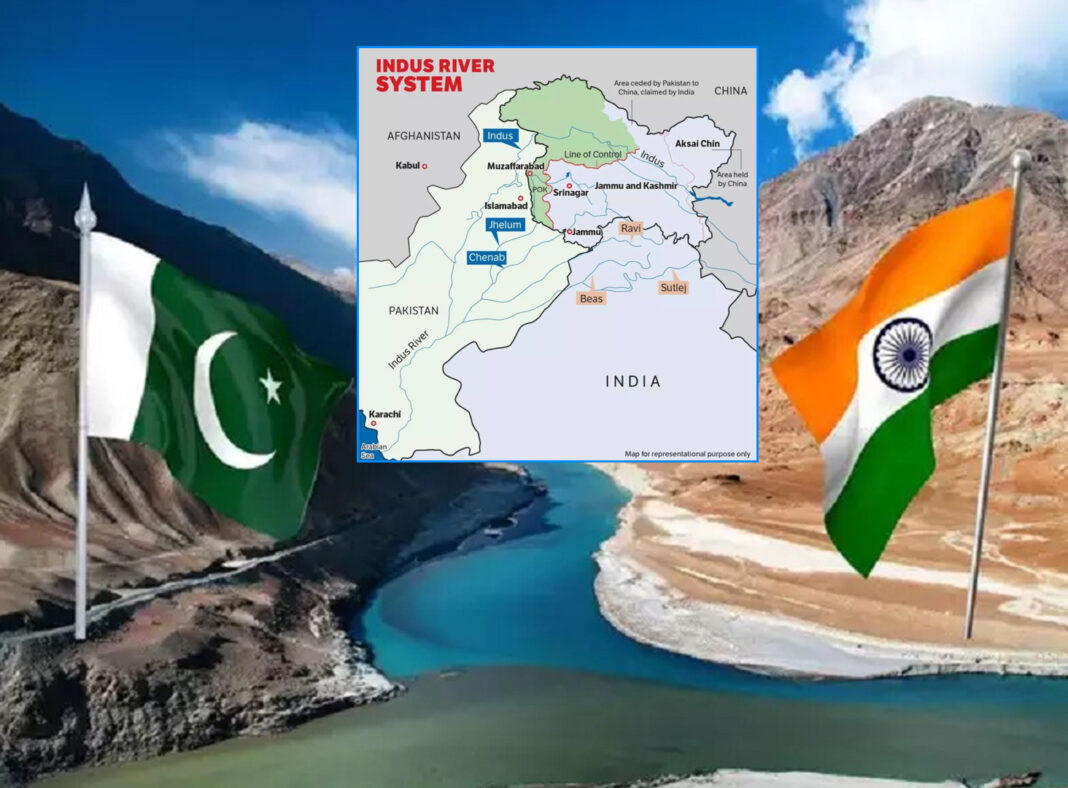
India decisively rejected a ruling by the Permanent Court of Arbitration regarding the Indus Water Treaty, declaring the tribunal illegally constituted and without jurisdiction over sovereign Indian decisions. The Hague-based court had challenged India’s suspension of the 1960 treaty following the Pahalgham terror attack and questioned hydroelectric projects in Jammu and Kashmir. India reiterated that the treaty suspension remains in effect until Pakistan permanently halts cross-border terrorism.
The Ministry of External Affairs explicitly rejected the ruling from the Hague-based Permanent Court of Arbitration, declaring the tribunal illegally constituted without legal jurisdiction over India’s sovereign decisions. New Delhi clarified that India has never recognized the tribunal’s authority nor participated in its proceedings, rendering any issued awards completely void and non-binding on Indian hydroelectric projects in Jammu and Kashmir.
India suspended the 1960 Indus Water Treaty:
India suspended the 1960 IWT—originally brokered by the World Bank between Prime Minister Jawaharlal Nehru and President Ayub Khan—in April 2025 following the Pahalgham terror attack. Under the original pact, India held control over the eastern rivers (Ravi, Beas, Sutlej), while Pakistan received rights over the western rivers (Indus, Jhelum, Chenab). India firmly reiterated that treaty operations will remain suspended until Pakistan completely eliminates cross-border terrorism.
The Court of Arbitration claimed that India’s suspension of the treaty lacked justification and sought to impose restrictions on ongoing Indian hydroelectric power developments along the western rivers in Jammu and Kashmir. India dismissed these directives, asserting that the court holds no jurisdiction to interfere with national infrastructure projects or sovereign water usage decisions.
