


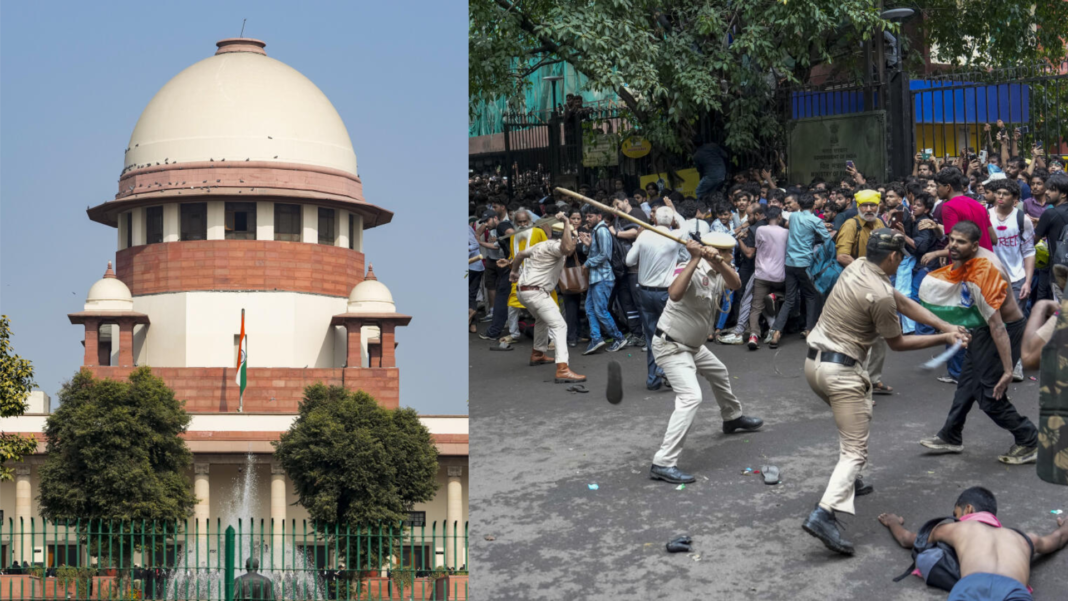
The Supreme Court of India on Tuesday agreed to invoke its plenary powers under Article 142 of the Constitution to quash First Information Reports (FIRs) registered against students who took part in nationwide demonstrations over the NEET-UG examination paper leak controversy. The widespread agitations had sparked intense public debate and led to major political developments, including Dharmendra Pradhan’s resignation as Union Education Minister.
A three-judge bench comprising Chief Justice Surya Kant and Justices Joymalya Bagchi and V. Mohana emphasised that student demonstrators should not face prolonged criminal proceedings. According to a report by The Hindu, the bench asked for a specific list of FIRs where only students are named, asserting that the apex court will use its extraordinary constitutional authority to dismiss those cases. The court noted that matters involving individuals with serious criminal antecedents would remain subject to judicial scrutiny.
During the hearing, advocates representing student rights pointed out that police authorities had yet to furnish full details regarding the registered cases following the July 20 crackdowns. In response, Solicitor General Tushar Mehta stated that law enforcement agencies would confine their active investigations strictly to identified history-sheeters and individuals facing grave criminal allegations rather than ordinary youth.
As highlighted by The Economic Times, the top court also announced the constitution of a high-powered committee comprising retired judges, a former Director General of Police, and a former CBI director. This panel will examine allegations of excessive police force, review protest footage, and look into complaints filed by demonstrators to ensure accountability across all administrative actions.
