


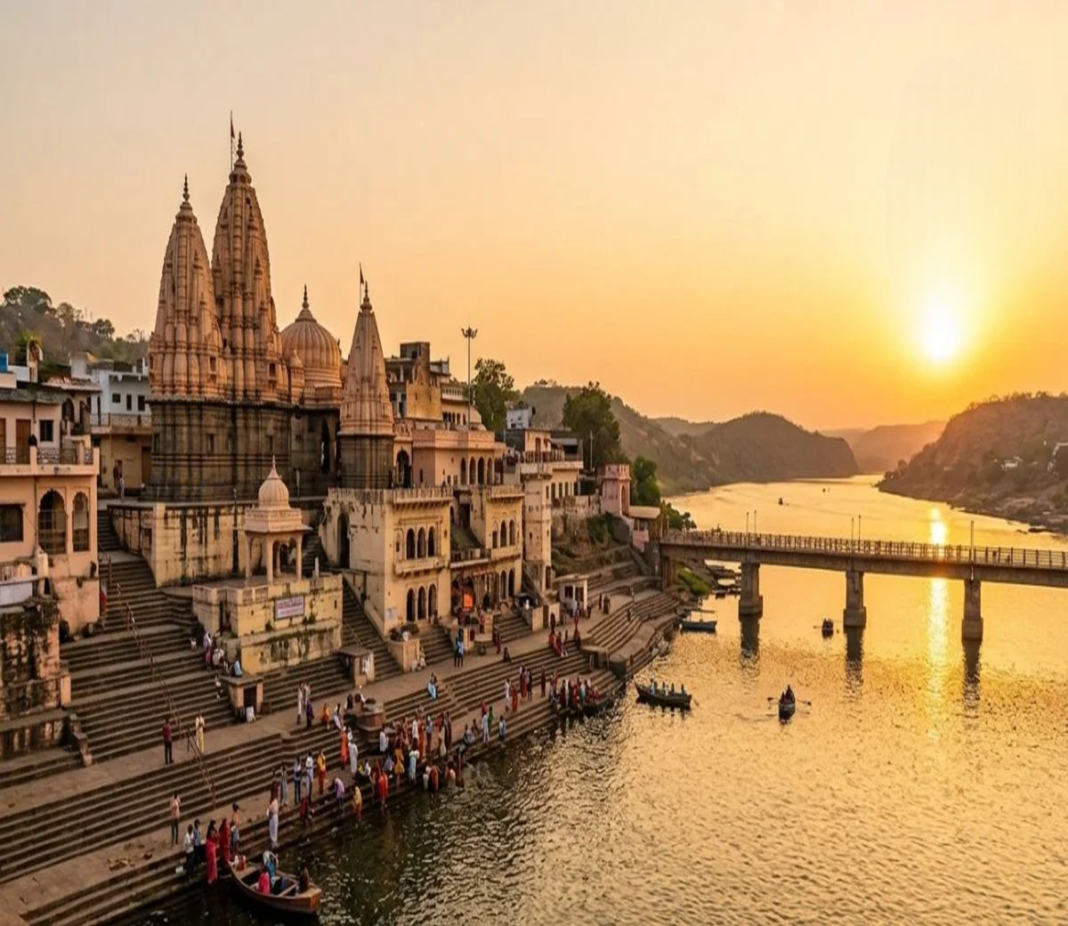
Omkareshwar Temple draws pilgrims and cultural heritage travelers to central India with its ancient architecture and sacred riverfront setting. Located on an island, this revered Jyotirlinga site offers visitors a distinctive blend of natural geography, centuries-old history and deeply rooted spiritual traditions.
Situated in the Khandwa district of Madhya Pradesh, the temple stands on a naturally formed river island surrounded by the Narmada River. When viewed from aerial perspectives, the island’s topography forms the shape of the sacred Devanagari Om symbol. Scriptural traditions indicate that Lord Shiva manifested as a column of light on this island, establishing the shrine as one of the twelve holy Jyotirlingas across India.
What Makes Omkareshwar Temple’s Architecture Unique?
The main five-storey Omkareshwar temple showcases classic Nagara-style architecture supported by dozens of elaborately carved stone pillars. Sacred traditions specify that a complete pilgrimage requires visiting both the island shrine and the Mamleshwar temple situated on the opposing south bank. Visitors also explore the nearby Govindapada Cave, where Adi Shankaracharya met his guru, along with historic ghats along the riverbanks.
The island is accessible via passenger boats or pedestrian suspension bridges connecting the mainland. Located roughly seventy-seven kilometers from Indore, the site connects easily by road and rail networks. Winter months provide pleasant weather for completing the circular parikrama route around the island.
Preserving historic temple sites enhances religious tourism and cultural appreciation. The unique island shrine remains a cornerstone of India’s spiritual landscape.
