


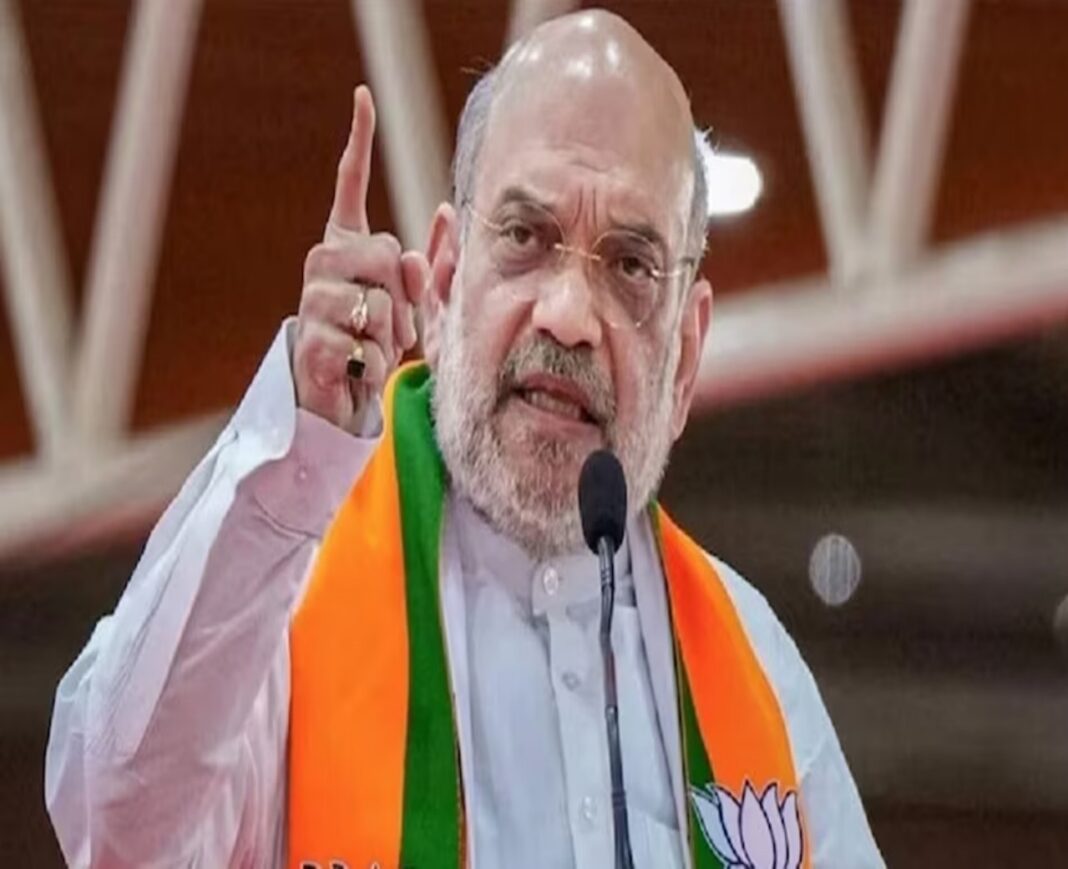
Amit Shah drug-free Punjab pledge has placed narcotics control at the centre of the BJP’s campaign ahead of the 2027 Punjab Assembly election, with the Union Home Minister promising action if his party forms the state government.Addressing the concluding rally of the BJP’s Nasha Mukt Punjab Yatra in Jalandhar, Shah said the party would aim to eliminate the trade in “chitta,” a term commonly used for synthetic drugs, by December 31, 2029.
Shah said several issues, including farming, industry, law and order and women’s safety, remain important in Punjab. However, he indicated that combating the drug problem would be the BJP’s central campaign issue.
The Union Home Minister also criticised the ruling Aam Aadmi Party government and targeted Arvind Kejriwal and other AAP leaders over their handling of the drug issue. These were political allegations made by Shah; AAP has rejected BJP criticism of its record.
Amit Shah Highlights BJP’s Punjab Anti-Drug Campaign
Amit Shah highlighted the BJP’s anti-drug campaign, which travelled through all 117 Assembly constituencies in Punjab and covered around 4,000 kilometres before concluding in Jalandhar. Party leaders used the campaign to raise concerns about narcotics addiction and meet affected families. Punjab’s drug problem has become a major election issue, with BJP, AAP, Congress and Shiromani Akali Dal exchanging allegations over responsibility and enforcement.
AAP representatives have defended the Bhagwant Mann government’s record, arguing that it has taken substantial steps against narcotics networks. Opposition parties, meanwhile, continue to question the effectiveness of those measures.Shah has also separately outlined a national goal of tackling narcotics networks by the end of 2029, calling for stronger coordination between central and state agencies.
The Amit Shah drug-free Punjab pledge therefore adds narcotics enforcement to the centre of the state’s election debate. How competing parties propose to address trafficking, addiction, rehabilitation and enforcement is likely to remain a significant campaign issue.
