


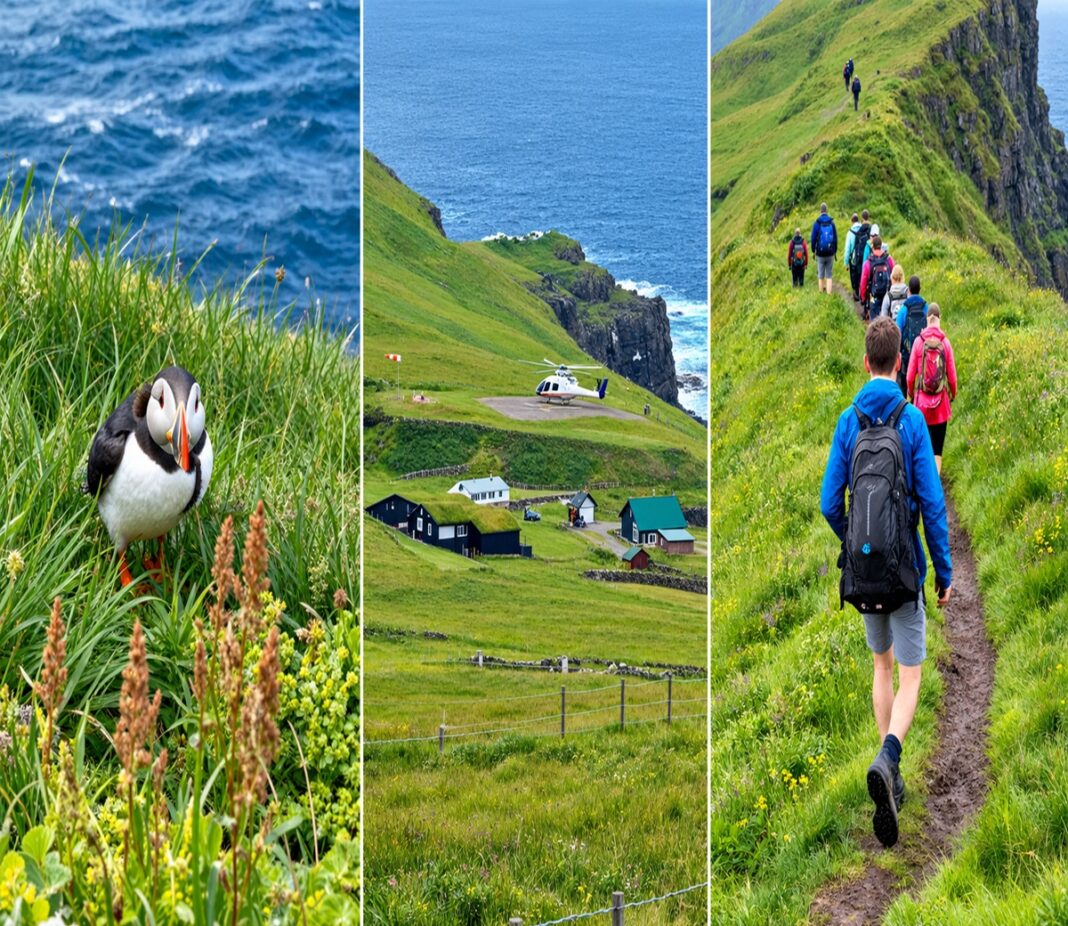
Helicopter services provide a vital lifeline for Mykines, a remote island in the westernmost Faroe Islands. With no roads, retail shops, or bridges connecting it to neighboring landmasses, residents depend heavily on air transport. Rough sea conditions often make regular boat travel difficult. Local authorities operate helicopter services that deliver basic groceries, medical supplies, and postal mail, helping sustain the island’s tiny community throughout the year despite its extreme isolation.
While approximately six full-time residents live on the island year-round, accessibility shifts dramatically with the changing seasons. Between May and August, sea ferries transport travelers from Sorvagur to view the island’s famous natural landscapes. Outside the summer window, severe North Atlantic weather often halts maritime traffic, leaving helicopter flights as the sole reliable method for transporting essential goods and travelers.
What Rules Protect Puffins As Helicopter Tourism Grows?
Mykines is a vital breeding ground for hundreds of thousands of Atlantic puffins nesting along its steep sea cliffs. To protect these sensitive habitats, local conservation policies limit daily visitors to around 100 to 150 people. Travelers arriving by boat or Helicopter must hire certified local guides and stay on designated walking trails. These measures help reduce environmental damage while allowing visitors to explore the island’s spectacular coastal landscape responsibly.
Environmental authorities advise booking ferry seats, guide reservations, and hiking permits months in advance for summer travel. Implementing strict sustainable tourism controls ensures that the remote island retains its tranquil character while safeguarding rare wildlife for future generations.
