


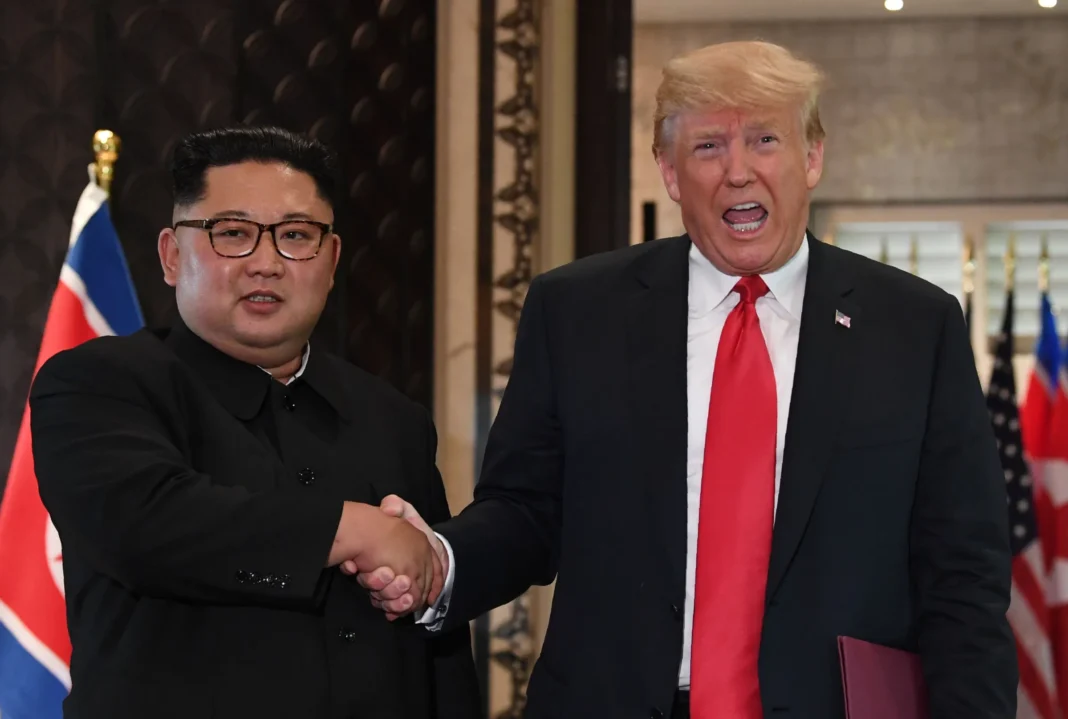
U.S. President Donald Trump announced plans to meet North Korean leader Kim Jong Un later this year, claiming Pyongyang holds 57 “very powerful” nuclear weapons. Speaking outside the White House, Trump defended his personal relationship with Kim as a global asset. The statement follows Trump’s decision to cut joint military exercises with South Korea, calling them hostile. However, Kim’s sister, Kim Yo-jong, cast doubt on reports of secret diplomatic talks.
U.S. President Donald Trump stated on Wednesday that he intends to meet with North Korean leader Kim Jong Un later this year, while offering an unusually specific assessment of Pyongyang’s atomic capabilities. Speaking to reporters on the White House South Lawn, Trump claimed that North Korea currently possesses “57 very powerful nuclear weapons”.
While defending his diplomatic strategy, Trump emphasized that his personal rapport with Kim remains a strong strategic asset. He asserted that the growth of North Korea’s nuclear arsenal should never have been permitted under previous U.S. administrations, but argued that the situation remains manageable so long as the United States maintains effective leadership.
Trump’s cited figure of 57 warheads aligns closely with external intelligence estimates, such as those by independent research organizations estimating around 60 assembled warheads, but marks a rare instance of a U.S. leader stating a precise figure publicly.
The remarks follow Trump’s order directing Pentagon officials to scale back joint U.S.-South Korea military exercises. Trump publicly characterized the joint drills as unnecessarily provocative and hostile toward Pyongyang.
Despite Trump’s optimistic framing of upcoming high-level engagement, North Korean officials offered a more reserved response. Kim Yo-jong, the high-ranking sister of Kim Jong Un, released a public statement questioning reports of active, secret negotiations between Washington and Pyongyang. While acknowledging that the two leaders maintain personal goodwill, she reiterated that North Korea views official U.S. policy with continued skepticism, leaving the precise timing and feasibility of a future summit uncertain.
