


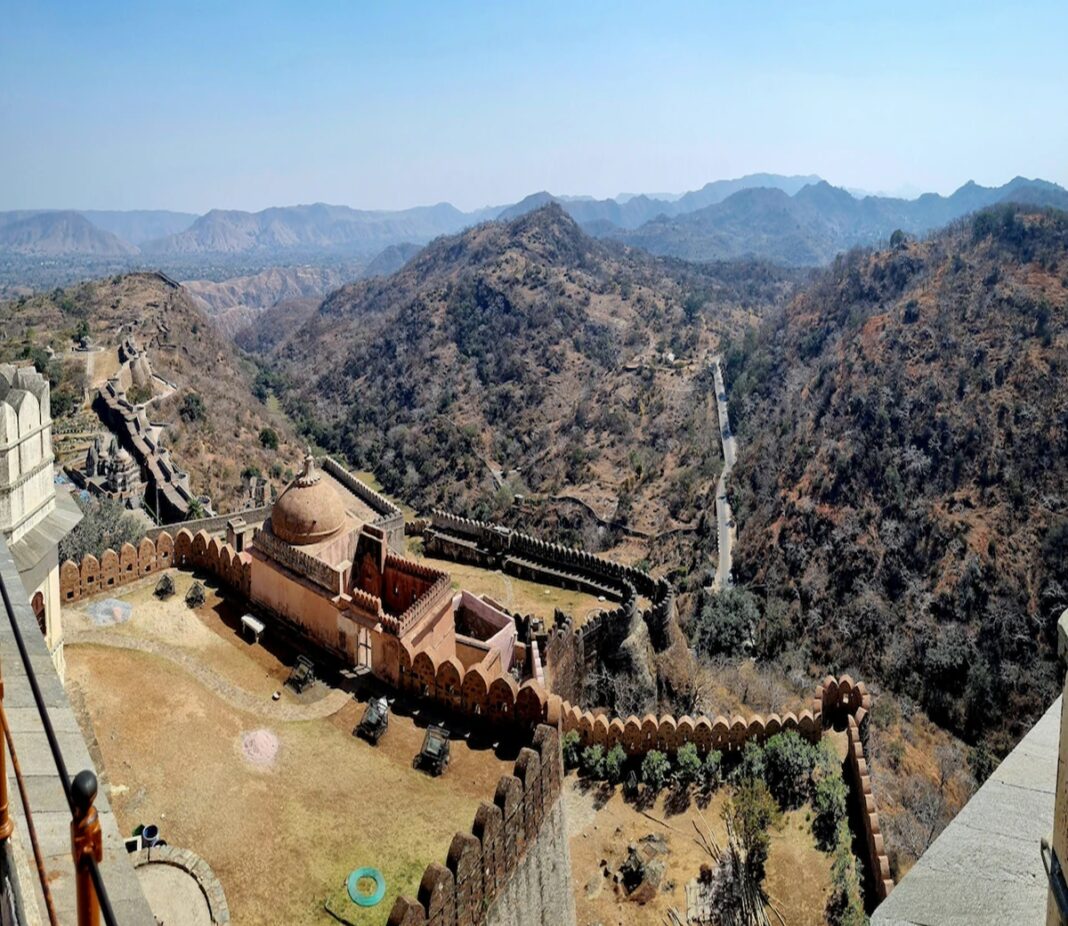
The Great Wall of India stands in Rajasthan, winding across 36 kilometers of rugged terrain in the Aravalli Hills. Constructed between 1443 and 1458 under the vision of Mewar ruler Rana Kumbha and court architect Mandan, the wall stretches over eleven hundred meters above sea level to protect royal palaces, ancient temples, and local populations.
Designed to integrate seamlessly with surrounding mountain ridges, the stone ramparts measure wide enough in key sections for eight horses to gallop abreast. Visitors had to navigate seven fortified gates, steep elevation gains, and complex defensive structures to approach the inner settlement. Historically, the fort fell only once in 1578 when invading Mughal forces poisoned the internal drinking water supply, forcing defenders to surrender.
Why Does Rajasthan’s Great Wall Fascinate Visitors?
Kumbhalgarh in Rajasthan served as a powerful military stronghold and is celebrated as the birthplace of legendary Rajput warrior Maharana Pratap. Part of the UNESCO-listed Hill Forts of Rajasthan, the historic complex contains more than 360 ancient Hindu and Jain temples. Visitors can also explore Badal Mahal, a remarkable hilltop palace reflecting the region’s architectural heritage.
Tourism experts recommend visiting between October and March when pleasant daytime temperatures allow comfortably walking along the wall paths and exploring the expansive palace grounds.
