


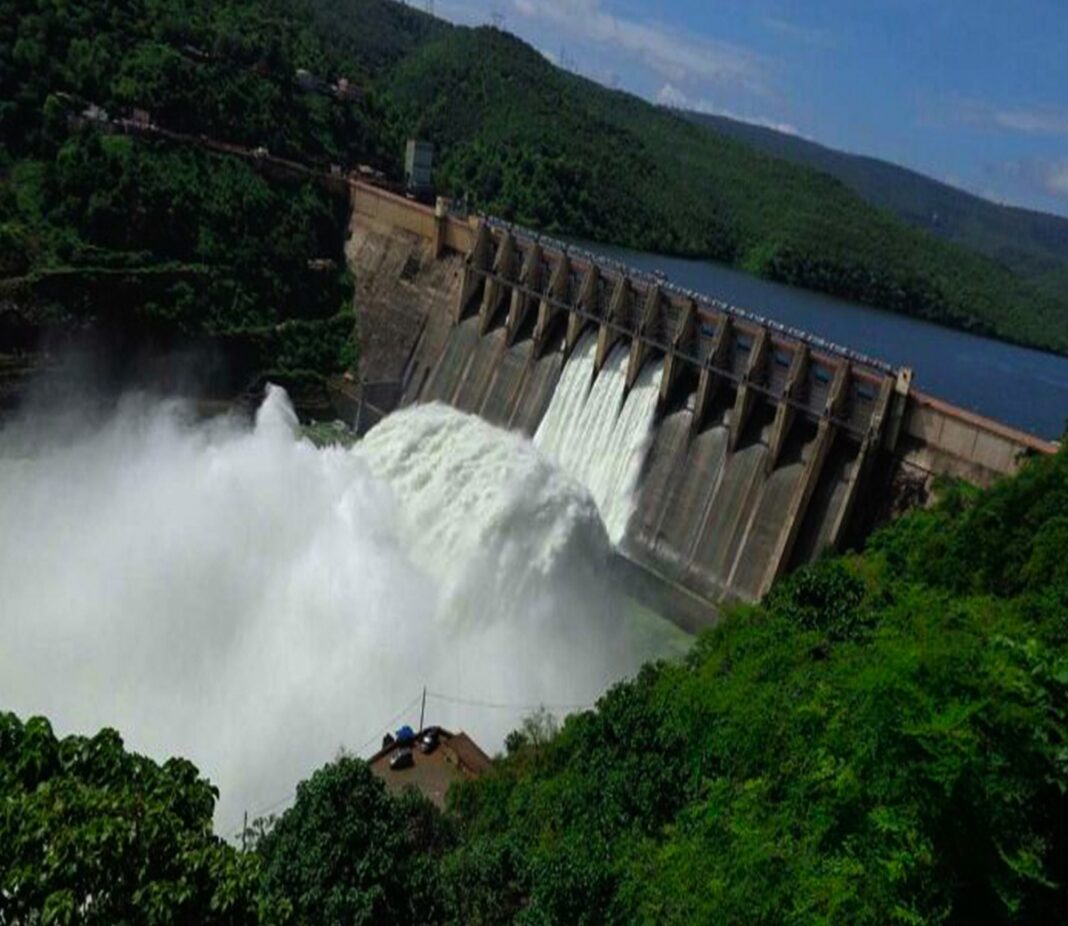
Srisailam reservoir levels are falling rapidly amid severe dry spells and weak monsoon conditions across upper catchment areas, triggering significant hydrological stress along the Krishna River basin. Irrigation officials warn that the declining levels pose major operational challenges for water management boards overseeing supplies across neighbouring states.
Poor monsoon rainfall throughout August halted natural stream inflows into the upstream reservoir system. Total storage dropped to nearly 139 TMC, with water elevations falling to 869.50 feet compared to the full reservoir level of 885 feet. Out of approximately 213 TMC accumulated earlier in the season, heavy utilisation for power generation and drinking water drawdowns depleted over 112 TMC rapidly.
How Are States Managing Remaining Srisailam Water?
Telangana draws over 20,000 cusecs daily, primarily to drive hydroelectric power generation at the Left Power House at Srisailam. Conversely, Andhra Pradesh draws water through the Pothireddypadu Head Regulator, Malyala pump station and Handri-Neeva Sujala Sravanti canals to meet drinking water needs across vulnerable Rayalaseema districts.
At recent Krishna River Management Board meetings, chief engineers advocated preserving remaining storage strictly for municipal drinking consumption rather than agricultural irrigation. Officials caution that continuing uncoordinated power generation or large-scale crop canal releases risks exhausting essential drinking reserves long before the monsoon season concludes.
Uncertainty surrounds agricultural survival across Kurnool and Nandyal districts, where rainfed cotton crops are withering. Unless upper catchment zones experience heavy rain showers soon, strict water rationing remains necessary to maintain civic supplies.
